
- Position:
- Batte Melt pump > NEWS >

5 Key Parameters for Precise Melt Pump Selection to Match Operating Conditions
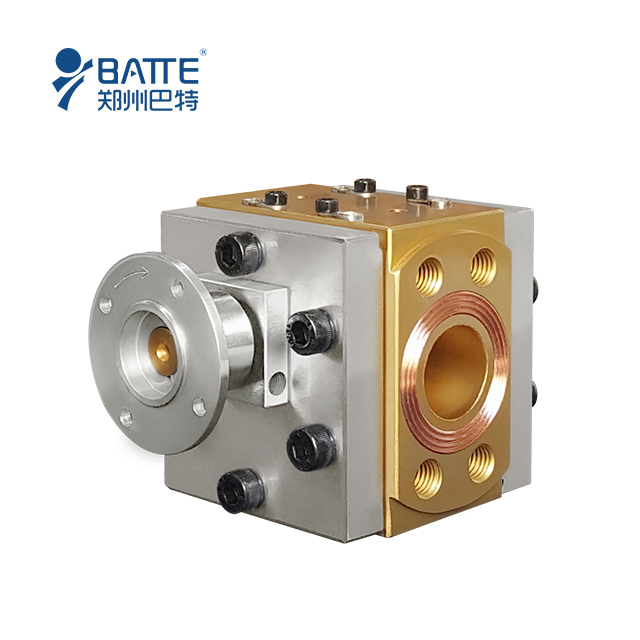
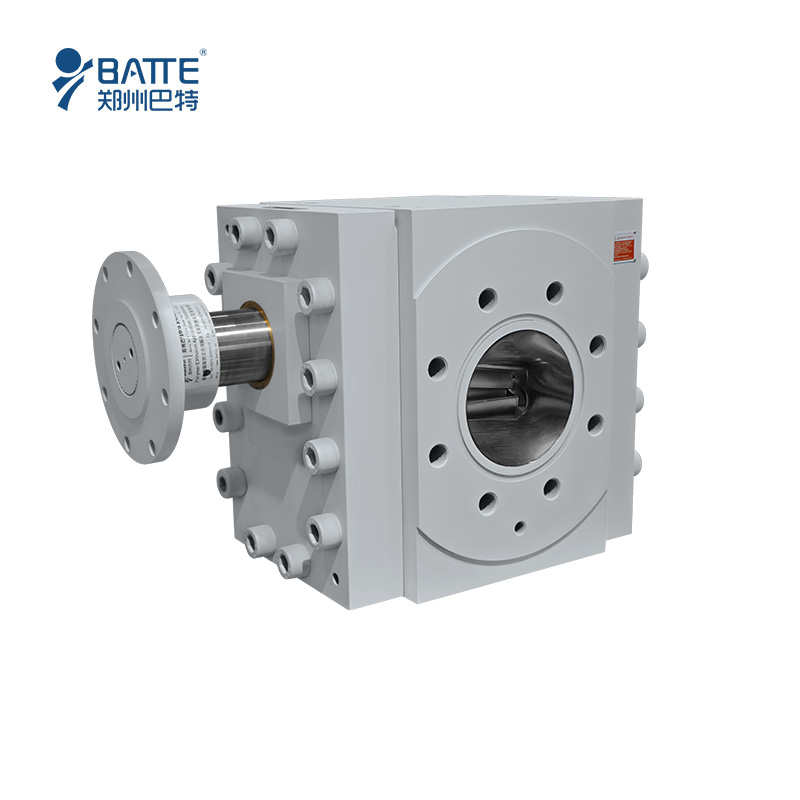
Scientific melt pump selection requires precise matching across five key dimensions—flow rate, material properties, system pressure, temperature control, and material composition—to avoid production bottlenecks or loss of precision. Customizing parameters based on the production line’s three output levels, melt viscosity, system resistance, and process temperature is essential to ensuring extrusion stability and equipment lifespan.
I. Flow Rate and Output: The Anchor for Selection Across All Operating Conditions
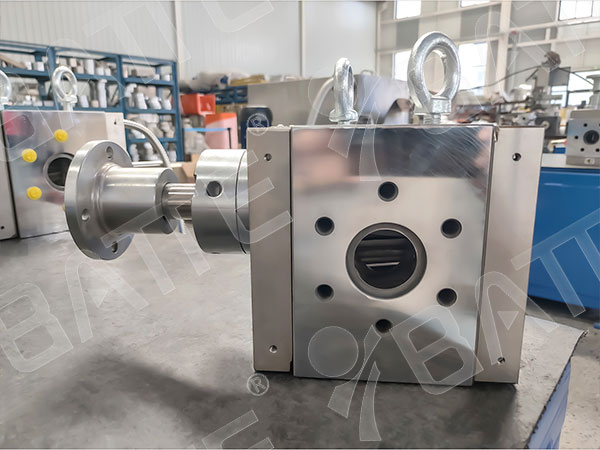
Selection should not be based solely on a single rated output. It is essential to clearly define the production line’s three output levels—minimum, standard, and maximum—to precisely match the melt pump’s per-revolution displacement, rated speed range, and the corresponding drive motor and gear reduction system.
If the selected flow rate is too low, it will directly limit the production line’s maximum capacity, leaving no room for future production increases; if the flow rate is too high, the equipment will operate in a low-speed range for extended periods, significantly reducing melt metering uniformity and pressure stability, leading to issues such as output fluctuations and accuracy deviations, which directly affect the quality of the final product.
II. Material and Viscosity: Core Prerequisites for Pump Compatibility
The flow characteristics, temperature sensitivity, and shear sensitivity of different polymer materials vary greatly. General-purpose and engineering plastics such as PET, PP, PE, PS, ABS, PC, and PMMA; biodegradable materials such as PLA, PBAT, and PGA; and special materials such as TPU and rubber elastomers all have completely different processing rheological parameters.
Even for the same material, melt viscosity can fluctuate by a factor of several to even dozens depending on molecular weight, modified formulations, and processing temperatures. When selecting a pump, one must never rely on a general description such as “for conveying plastics”; instead, the specific material and its viscosity range at the corresponding process temperature must be precisely defined. This ensures that the pump’s structure, gear clearance, and operating parameters are properly matched, thereby preventing issues such as material degradation and uneven output.
III. Pressure and Pressure Differential: Safe Matching to Account for System-Wide Resistance
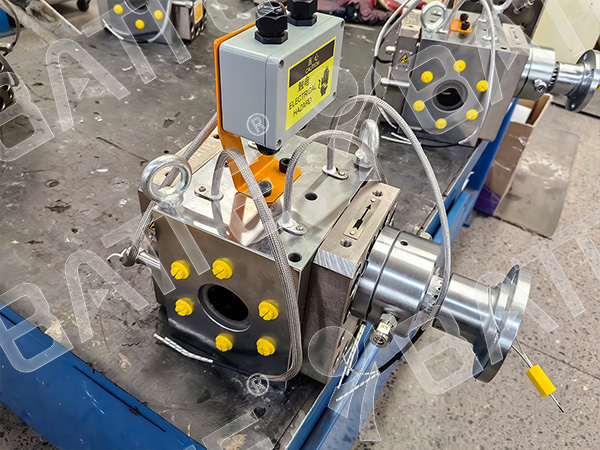
Selection should not focus solely on discharge pressure; it must simultaneously evaluate the three core indicators—inlet pressure, discharge pressure, and pressure differential across the pump—incorporating mold resistance, screen changer resistance, and conveying line resistance into the calculation.
Insufficient inlet pressure directly results in inadequate material suction by the pump, leading to material shortages and pulsating discharge; excessively high outlet pressure and pressure differential significantly increase the operational load on gears, bearings, mechanical seals, and the drive system, accelerating wear on core components and drastically shortening the equipment’s service life. It is essential to select a melt pump with the appropriate pressure rating to ensure long-term, stable operation of the equipment.
IV. Temperature and Temperature Control: Key Factors for Ensuring Stable Melt Rheology
Optimal processing temperature ranges and temperature control accuracy requirements vary greatly among different materials; the temperature control stability of the melt pump directly affects melt viscosity and molding quality.
Mainstream heating methods include electric heating and thermal fluid heating. Selection must be based on a comprehensive evaluation of the material’s temperature sensitivity, process temperature control accuracy requirements, on-site energy conditions, and ease of future maintenance to avoid issues such as abnormal melt rheology and product defects caused by temperature fluctuations.
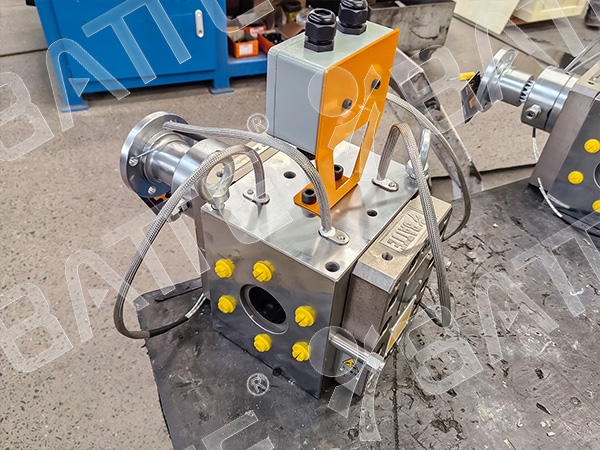
V. Materials and Seals: Ensuring Durability Under Special Operating Conditions
The materials for the pump body, gears, and bearings, as well as the configuration of the sealing structure, must be customized based on the physical and chemical properties of the material: Conventional wear-resistant materials can be used for ordinary thermoplastic materials; materials processed under high-viscosity, high-shear conditions require optimized wear-resistant designs for gears and bearings; for special materials that are corrosive, volatile, or toxic, all wetted components must be upgraded to corrosion-resistant materials to accommodate specific production conditions, thereby eliminating failures such as material corrosion, leakage, and wear-related malfunctions, and comprehensively enhancing equipment durability and production safety.
Email: sale@meltpump.com
WhatsApp: +86 158 3833 1071

Any questions about our products, please feel free to contact us! We promise you high-end products and first-class service.Look forward to our cooperation!!!
- sales@battemachinery.com
- +0086-371-67991755


